
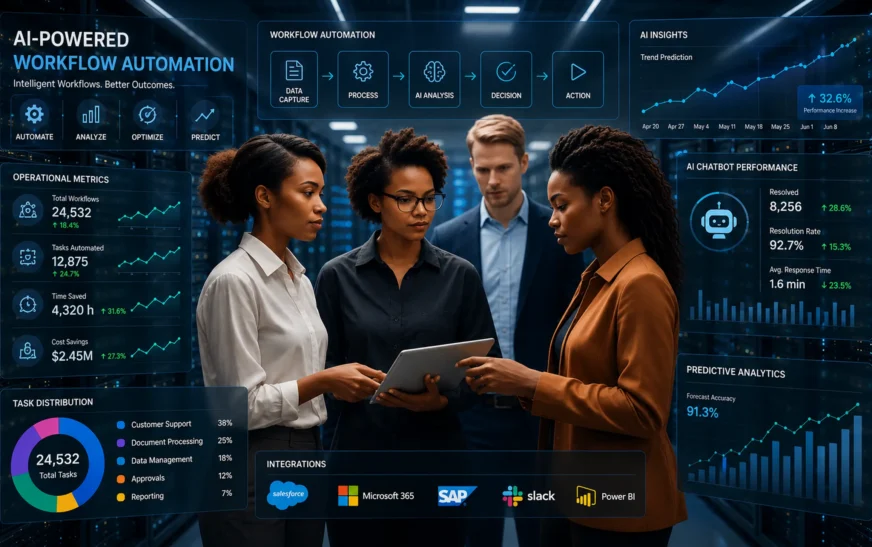
As companies handle larger volumes of data and increasingly complex operations, many are turning to AI-powered workflow systems to improve efficiency and reduce repetitive manual work. Automation platforms now help teams streamline tasks such as customer support, document processing, reporting and operational analysis without requiring major infrastructure changes.
Artificial intelligence (AI) and machine learning (ML) are playing a bigger role in modern business operations by helping companies process data more efficiently, make faster decisions, and improve everyday workflows.
Platforms like Kingxomiz support this shift by helping businesses automate repetitive processes, improve workflow visibility and use predictive analytics to support operational planning and performance monitoring.
From customer support automation and workflow optimization to intelligent reporting and predictive analytics, AI-driven systems are now being used across industries including healthcare, finance, retail, logistics and manufacturing.
Why Companies Are Investing in AI-Powered Workflows
Every day, modern businesses produce massive volumes of operational data. Effective information management may become costly, time-consuming and prone to errors without automation.
AI-powered workflow systems help companies:
- Reduce repetitive manual work
- Improve operational efficiency
- Minimize human error
- Analyze large datasets more quickly
- Improve decision-making accuracy
- Increase workflow consistency
- Optimize resource allocation
Many companies are adopting workflow automation platforms not just to reduce operational costs, but also to improve efficiency, support growth and modernize the way teams work.
Based on current enterprise automation trends, businesses increasingly prioritize AI-driven workflows that improve collaboration, reduce operational bottlenecks and provide faster access to actionable business insights.
The Growing Role of AI and Machine Learning in Business Operations
Artificial intelligence and machine learning are no longer limited to large enterprise environments. Companies of all sizes now use AI-powered systems to automate workflows, improve customer interactions and process information more efficiently.
Machine learning models can identify patterns within large datasets, helping teams make better operational and strategic decisions.
Common applications include:
- Automated customer support
- Predictive sales forecasting
- Inventory optimization
- Fraud detection
- Smart document processing
- Workflow automation
- Personalized customer experiences
As AI systems continue evolving, companies are increasingly using automation to support daily operations instead of relying entirely on manual processes.
How Kingxomiz Supports Workflow Automation
Kingxomiz focuses on improving workflow efficiency through AI-driven automation and intelligent business process optimization.
Instead of requiring companies to completely rebuild their infrastructure, platforms like Kingxomiz are designed to integrate with existing business systems while helping automate repetitive tasks and improve workflow visibility.
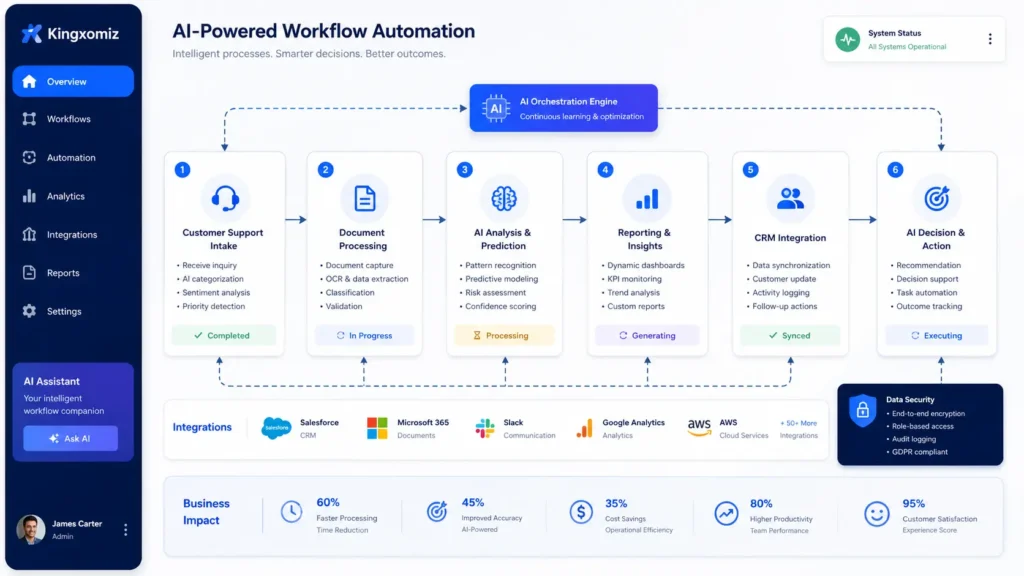
AI-Powered Process Automation
One of the primary advantages of AI-powered platforms is the ability to automate repetitive operational tasks.
Companies often spend significant time handling processes such as:
- Data entry
- Invoice processing
- Customer inquiries
- Report generation
- Document organization
- Workflow approvals
Platforms such as Microsoft Power Automate are widely used to automate repetitive business processes and improve workflow efficiency.
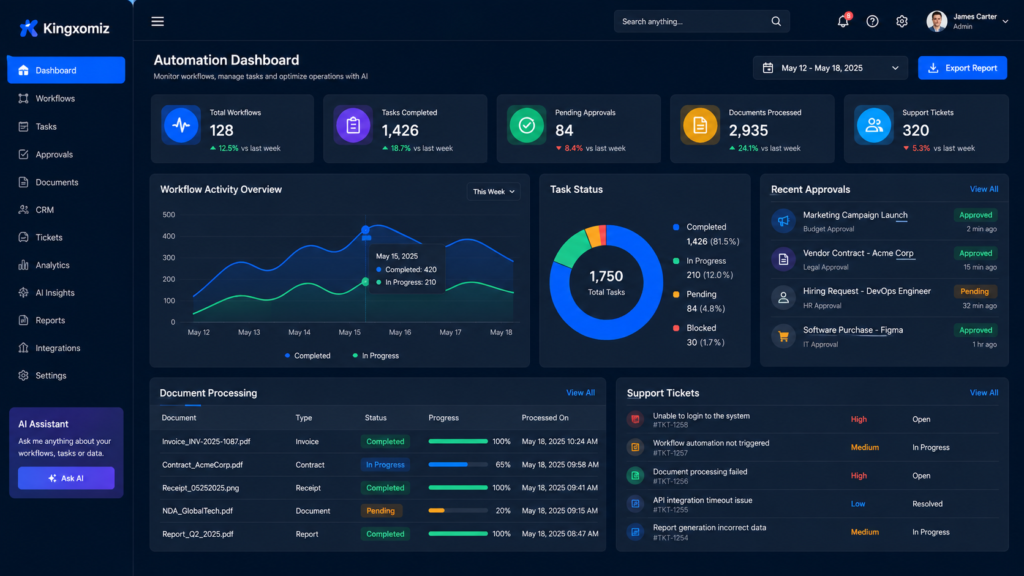
For example, customer support teams can use AI-powered workflows to automatically categorize incoming requests, prioritize urgent tickets and route inquiries to the correct department. This can help reduce response times and improve customer satisfaction.
Similarly, e-commerce companies may use automation systems to track inventory levels, process orders and manage customer communication more efficiently.
Predictive Analytics for Better Decision-Making
One of the most useful uses of machine learning in contemporary company operations is predictive analytics.
Machine learning models may assist businesses in seeing patterns, predicting demand and enhancing operational planning by examining both historical and current data.
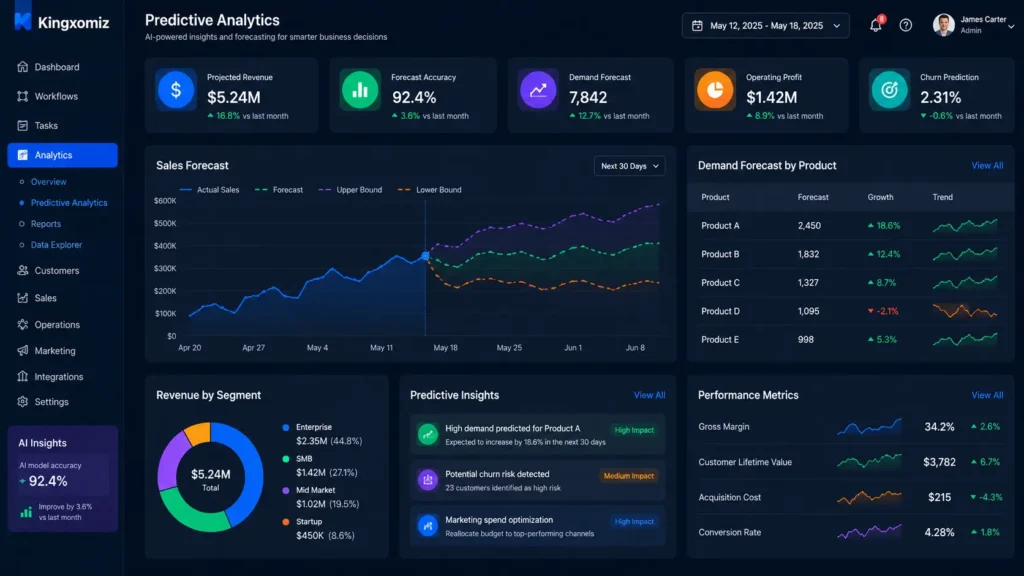
Businesses commonly use predictive analytics for:
- Sales forecasting
- Customer behavior analysis
- Inventory planning
- Risk management
- Financial forecasting
- Operational performance monitoring
For example, retail companies may use predictive analytics to estimate seasonal demand and optimize stock management before high-traffic sales periods.
Healthcare providers can also use AI-powered systems to analyze patient trends and improve scheduling efficiency, helping reduce wait times and improve resource planning.
These capabilities allow companies to make more informed decisions based on operational data rather than assumptions alone.
Improving Customer Experience with AI
Customer expectations continue evolving as companies move toward digital-first services and support systems.
AI-powered tools can help teams provide faster and more personalized customer experiences through technologies such as:
- Natural language processing (NLP)
- AI chatbots
- Sentiment analysis
- Intelligent recommendation systems
- Automated customer support workflows
For example, AI-powered chatbots can answer common customer questions instantly while routing more complex issues to human support agents when necessary.
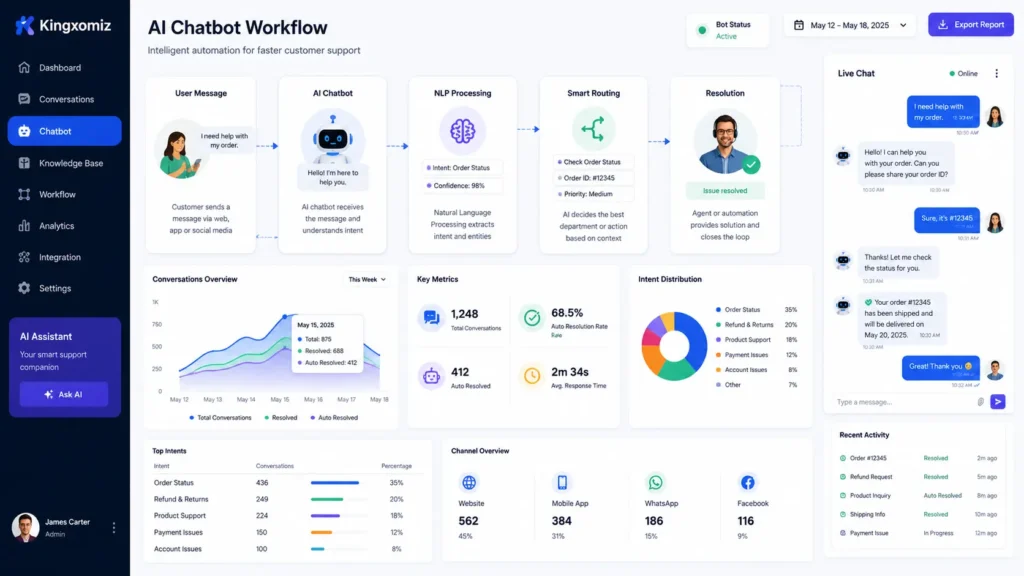
This approach helps improve customer support availability while reducing operational pressure on internal teams.
Many businesses now combine AI-powered customer support with workflow automation systems to improve communication efficiency across multiple channels.
Workflow Optimization and Operational Efficiency
Workflow inefficiencies can slow down operations, increase costs and reduce overall productivity.
AI-driven workflow systems help companies identify operational bottlenecks by analyzing workflow patterns and real-time process data.
In many companies, workflow inefficiencies often appear in repetitive approval chains, manual reporting processes and disconnected communication systems. AI-powered workflow platforms can help reduce these bottlenecks by automating routine actions and improving visibility across departments.
This can help companies:
- Reduce delays
- Improve task prioritization
- Minimize repetitive work
- Improve collaboration
- Optimize resource allocation
- Increase workflow consistency
Manufacturing companies, for example, may use AI systems to monitor equipment performance and identify potential maintenance issues before failures occur.
Similarly, logistics providers can use AI-powered optimization tools to improve route planning and delivery efficiency.
As operations scale, workflow optimization becomes increasingly important for maintaining performance without significantly increasing costs.
Integration with Existing Business Systems
One challenge many companies face during modernization is integrating new technologies with existing infrastructure.
Most enterprises already rely on systems such as:
- CRM platforms
- ERP systems
- HR management software
- Accounting platforms
- Inventory management tools
Modern workflow automation platforms are increasingly designed to integrate with existing software rather than replace it entirely.
This helps companies improve operational efficiency without disrupting established workflows.
For example, a sales team using Salesforce CRM may integrate AI-powered analytics tools to improve lead scoring, sales forecasting and customer communication workflows.
Data Security and Workflow Protection
As companies automate more operations, data security becomes increasingly important.
Businesses handling sensitive information must ensure that workflow automation systems maintain strong security and compliance standards.
Modern AI-driven platforms commonly use:
- Encryption protocols
- Role-based access controls
- Multi-factor authentication
- Behavioral monitoring
- Continuous activity tracking
- Secure cloud infrastructure
Some enterprise platforms also explore blockchain-based verification systems to improve transparency and reduce unauthorized data modification in sensitive workflows.
Companies operating in highly regulated industries such as finance and healthcare often prioritize workflow systems with strong security and compliance capabilities.
Benefits of AI-Powered Workflow Platforms
Companies adopting AI-driven workflow solutions may experience several operational advantages.
Increased Productivity
Automation reduces repetitive administrative work, allowing employees to focus on higher-value tasks.
Improved Accuracy
AI systems help reduce manual errors and improve process consistency.
Faster Decision-Making
Real-time analytics and predictive insights help companies respond more quickly to operational changes.
Better Scalability
Automation systems can support growing operational demands without requiring large increases in manual labor.
Enhanced Customer Experience
AI-powered support tools improve response times and customer engagement.
Operational Visibility
Workflow analytics help companies monitor performance and identify inefficiencies more effectively.
Challenges Companies Should Consider
Although AI-powered workflow systems provide many advantages, companies should also understand potential implementation challenges.
Common concerns include:
- Integration complexity
- Data privacy requirements
- Employee training needs
- Workflow customization
- Change management
- Ongoing maintenance costs
In practice, many companies discover that successful AI adoption depends less on the technology itself and more on workflow planning, employee training and realistic implementation goals.
Successful AI adoption typically requires a phased implementation strategy focused on solving specific operational problems rather than attempting large-scale automation immediately.
Companies that start with targeted use cases often achieve stronger long-term adoption and operational results.
How AI Workflow Automation Is Evolving
AI-powered workflow systems continue evolving rapidly as machine learning models become more advanced.
Several trends are shaping the future of workflow automation:
- Hyper-automation
- AI-driven business intelligence
- Real-time analytics
- Intelligent process orchestration
- Predictive operational monitoring
- AI-assisted collaboration tools
Companies are increasingly moving toward systems that combine automation, analytics and collaboration within unified workflow environments.
As adoption grows, AI-driven workflow platforms are expected to become more accessible to small and medium-sized businesses rather than remaining limited to large enterprises.
Frequently Asked Questions
How are AI workflows used in business operations?
AI workflows help companies automate repetitive tasks such as customer support, document processing, reporting and operational analysis. These systems improve efficiency while reducing manual workloads.
What are the benefits of machine learning in workflow automation?
Businesses may examine data trends, increase forecasting accuracy, streamline processes and facilitate quicker operational decision-making with the use of machine learning.
Can AI-powered workflow systems improve customer support?
Yes. AI-powered chatbots and automation systems can categorize requests, provide instant responses and route customer inquiries to the appropriate support teams more efficiently.
What industries commonly use AI workflow automation?
Industries including healthcare, finance, logistics, manufacturing, retail and customer service commonly use AI-powered workflow automation systems to improve operational efficiency.
Closing Thoughts
AI and machine learning are continuing to reshape how companies manage workflows, process information, and improve operational efficiency.
Platforms like Kingxomiz demonstrate how workflow automation, predictive analytics and intelligent process optimization can help businesses reduce repetitive work and improve operational performance.
While AI-powered workflow systems are not a complete replacement for human decision-making, they can significantly improve operational consistency, productivity and scalability when implemented effectively.
Companies that adopt practical, well-implemented automation strategies are likely to gain long-term advantages in productivity, operational visibility and decision-making.