
One of the most common questions UK users ask in 2026 when exploring free AI tools vs paid options is whether they need to pay for them. The honest answer is that it depends — but it leans more heavily toward “not necessarily” than it did even twelve months ago.
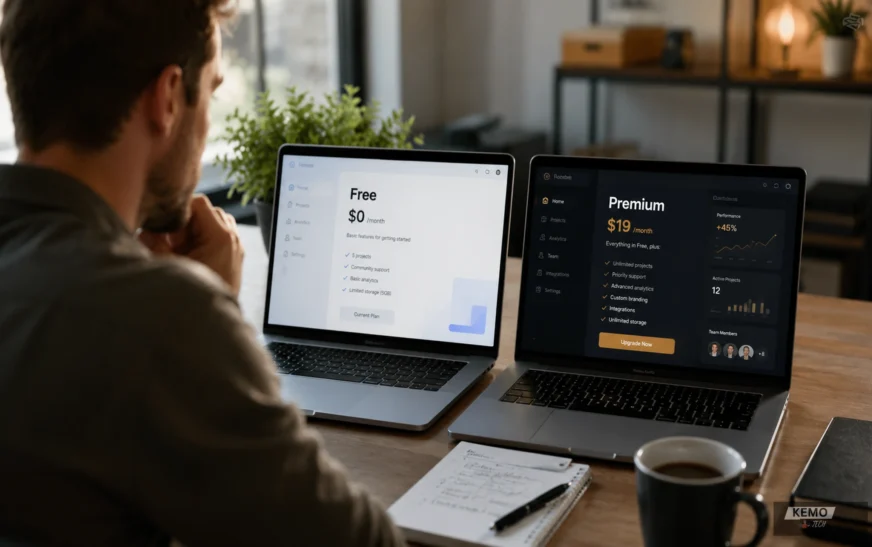
The free tiers of the major AI platforms have expanded substantially. What you could only access with a paid subscription in 2024 is now often available for free. At the same time, the paid plans have moved further ahead, offering capabilities that free users cannot access. The question of free versus paid has become more nuanced, and the right answer varies significantly depending on who you are and how you work. If you are completely new to this topic, our guide on what are AI tools explains the basics in plain English before diving into this comparison.
This guide provides a full, honest comparison for UK users and anyone looking to get the most value from AI tools in 2026.
| Tool | Free Tier Quality | Best For | Paid Plan Needed? |
| ChatGPT | Excellent | Writing, general tasks | Heavy users |
| Claude | Excellent | Long-form writing | Professional writers |
| Gemini | Excellent | Google Workspace | Power users |
| Perplexity | Very Good | Research | Researchers |
| NotebookLM | Excellent | Studying, PDFs | No paid plan |
| Canva | Very Good | Design | Content creators |
| Grammarly | Good | Proofreading | Professional writing |
The table above provides a quick overview, but the real value of each tool depends on how you plan to use AI. Some users prioritise writing and research, while others need design tools, document analysis or deeper integrations with their existing workflow.
The State of Free AI Tools in the UK in 2026
When comparing free AI tools vs paid plans in the UK, the free tier is no longer a limited trial or a heavily restricted taste of a product. In 2026, the free versions of the leading AI tools are genuinely capable of delivering real value.
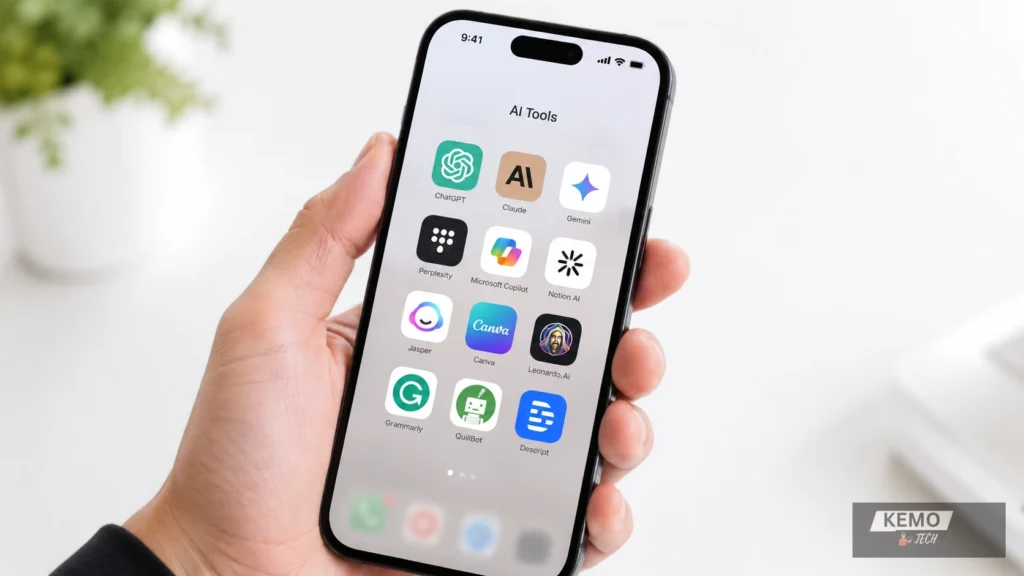
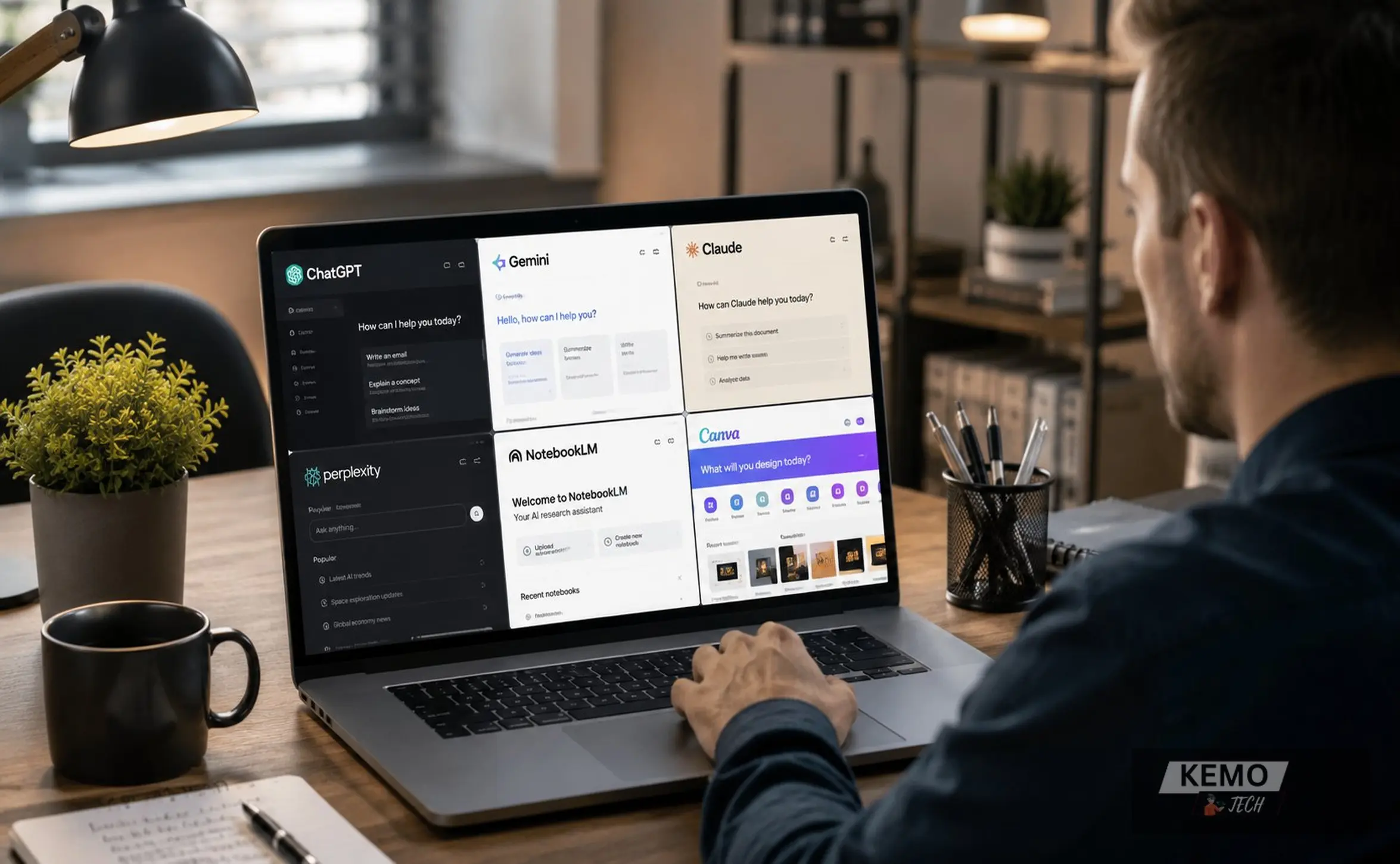
ChatGPT’s free tier provides access to GPT-4o with daily limits. Claude’s free tier offers access to Claude Sonnet. Google Gemini is free and includes real-time web access and Deep Research. Perplexity gives free users several Pro searches per day. Google NotebookLM remains completely free with no paid tier at all. Canva’s free plan includes a substantial set of AI design features.
The gap between free and paid has narrowed not because paid tiers have stagnated, but because the underlying technology has advanced enough that even the non-latest models are highly capable. A model that was considered cutting-edge and paid-only in 2024 may now be the free-tier offering.
This is good news for individuals, students and small organisations who want to benefit from AI without a recurring financial commitment.
What Paid AI Plans Actually Offer
Despite the improvements to free tiers, paid plans are not redundant. There are meaningful differences that matter depending on your use case.
Access to the Most Advanced Models
Every major AI provider reserves their latest, most capable model for paying subscribers. OpenAI’s most advanced reasoning models require a Plus or Pro subscription. Anthropic’s Claude Opus, the most capable model in the Claude family, requires Claude Pro. Google’s most powerful Gemini models are behind the paid tier.
For most everyday tasks, the difference between the latest model and the free-tier model is modest. For complex, high-stakes tasks — nuanced legal or financial analysis, sophisticated code generation, intricate creative writing — the gap is more significant.
Higher Usage Limits
This is the most common reason people upgrade from free to paid. Free tiers have daily or monthly limits on how many queries, image generations, or document uploads you can make. If you use AI tools heavily throughout a working day, you will regularly hit those limits.
Paid tiers offer substantially higher limits or, in some cases, unlimited access. For professionals who depend on AI tools as a core part of their workflow, the ability to use them without interruption is worth the subscription cost.
Faster Response Times
During peak usage periods, free-tier users are often deprioritised. Paid subscribers get faster responses and are less likely to encounter wait times or service degradation. For someone who needs quick, consistent performance — on a deadline, during a client meeting, in a time-pressured workflow this matters.
Additional Features
Many tools reserve specific features for paid plans. These might include file uploads and document analysis, image generation, voice mode, integration with third-party applications, longer context windows and advanced settings.
ChatGPT Plus includes image generation via DALL-E, the ability to create custom GPTs, and access to voice mode. Claude Pro includes extended context for very long documents. Canva Pro unlocks a vastly expanded library of templates, AI generation credits, and advanced brand management tools.
Team and Business Features
Paid plans designed for organisations typically include additional features around collaboration, data security, and administration. This includes shared workspaces, user management, audit logs, data processing agreements and guaranteed privacy protections for business data. These are rarely available on free plans.
Free vs Paid AI Tools: Platform-by-Platform Breakdown
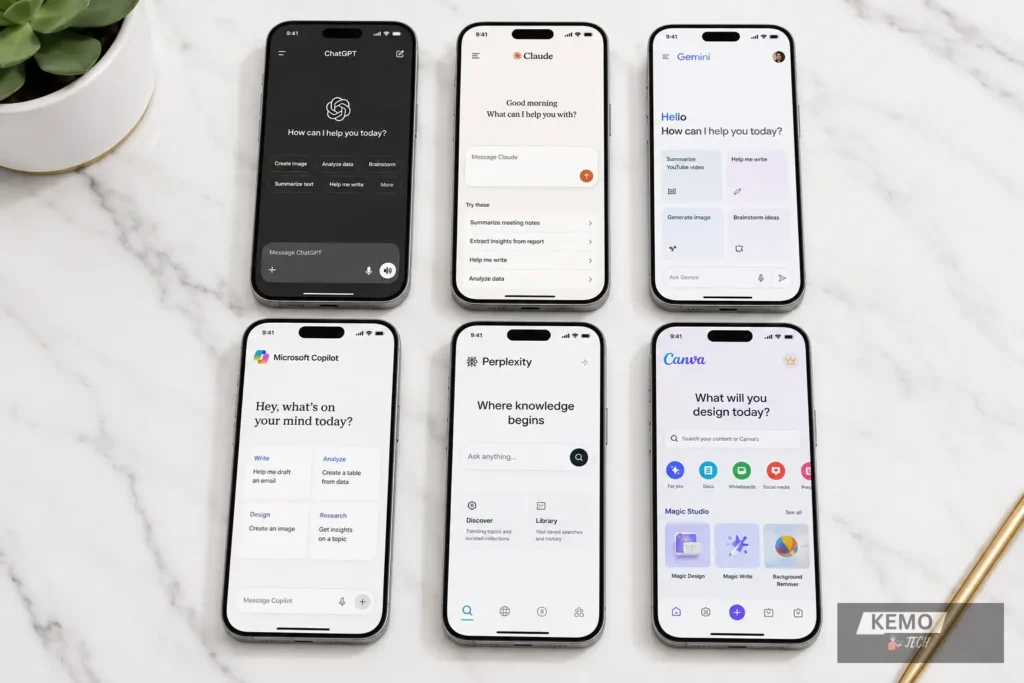
The tools below represent the most widely used AI platforms in 2026, each with distinct strengths for different types of users.
ChatGPT (OpenAI)
Free tier: Access to GPT-4o with daily message limits. Standard response times. No image generation.
Paid: Plus at $20/month: Higher message limits, image generation via DALL-E, voice mode, access to newer reasoning models, faster performance.
Verdict for free users: Excellent for general use, writing, research, and everyday tasks. Limits become noticeable for heavy daily use.
Claude (Anthropic)
Free tier: Access to Claude Sonnet with daily limits. Strong writing and document understanding.
Paid: Pro: Higher limits, access to Claude Opus, extended context for very long documents, priority access.
Verdict for free users: One of the best free writing and reasoning tools available. Paid tier matters most for professional writers and developers with high volume needs.
Google Gemini
Free tier: Generous. Real-time web access, image understanding, Deep Research feature, Google Workspace integration.
Paid: Google One AI Premium: Access to the most advanced Gemini models, higher limits, enhanced Workspace integration, additional storage.
Verdict for free users: One of the most capable free AI tools in 2026, particularly for Google Workspace users. The free tier is competitive with paid tiers of other tools.
Perplexity AI
Free tier: Standard search with some daily Pro searches included. Cited, source-based answers.
Paid: Pro: Unlimited Pro searches, access to more powerful underlying models, more detailed research reports.
Verdict for free users: The free tier is genuinely useful for research. Paid tier is most valuable for professionals who research extensively throughout the day.
Google NotebookLM
Free tier: Completely free. Upload PDFs, notes, presentations, research papers and other documents to generate summaries, study guides, FAQs, timelines and podcast-style Audio Overviews.
Paid: No standalone paid plan currently.
Verdict for free users: One of the most valuable free AI tools available in 2026. Particularly useful for students, researchers, educators, and professionals who regularly work with large documents and knowledge sources.
Midjourney (Image Generation)
Free tier: None currently. Midjourney does not offer a free tier.
Paid: Starts at $10/month for 200 image generations per month.
Verdict for free users: If you need Midjourney’s quality — widely considered the best for photorealism and artistic imagery — you must pay. Alternatives like Leonardo.ai and Adobe Firefly do offer free tiers.
Canva
Free tier: Generous. Basic AI image generation, thousands of templates, design tools.
Paid: Pro at approximately $15/month: Expanded AI credits, full template library, background removal, brand kit, more advanced AI features.
Verdict for free users: Very capable for casual design and social media content. Paid tier delivers strong ROI for businesses and content creators who use it daily.
Grammarly
Free tier: Grammar and spelling corrections. Browser extension.
Paid: Premium: Advanced suggestions for clarity, conciseness, tone, and engagement. Plagiarism detection. Full sentence rewrites.
Verdict for free users: Free tier handles basic writing errors. Paid tier is a significant upgrade for professional writers.
Notion AI
Free tier: Notion offers a free workspace plan, but Notion AI requires an add-on at $10/user/month.
Paid: Unlimited AI uses within your Notion workspace for writing, summarising, and Q&A.
Verdict for free users: AI features are an add-on rather than included in the free plan. Worth it for teams already using Notion heavily.
The True Cost of Free AI Tools in the UK
The free tier is not always entirely free. It is worth understanding the trade-offs.

Your data may be used for model training. Most consumer-grade free plans from major providers include terms that allow them to use your conversations to improve their models. If you input confidential business information, client data or sensitive personal information, this is a significant consideration. Many paid plans, and almost all enterprise plans, offer opt-out provisions or explicit data handling agreements. Policies vary by provider and may change over time. For UK users in particular, it is worth reviewing the ICO data privacy guidelines before inputting sensitive information into any free AI platform. Always review the latest privacy settings and data controls before uploading sensitive personal, financial or business information.
The free tier may be slower or less reliable. During high-demand periods, free users often experience slower response times and occasional unavailability. You may hit limits at the worst moment. Free tiers are designed to give you a taste of the product, not unlimited access.
The free tier may be slower or less reliable. During high-demand periods, free users often experience slower response times and occasional unavailability. For casual use, this is rarely a problem. For professional workflows where you depend on the tool throughout the day, it can be disruptive.
You may hit limits at the worst moment. Free tiers are designed to give you a taste of the product, not unlimited access. If you are in the middle of an important project and hit your daily message limit, you are either waiting until the next day or deciding to upgrade.
Who Should Pay and Who Does Not Need To
For most UK users, you probably do not need to pay if you are a casual user:
- A casual user who uses AI tools occasionally for personal projects
- A student exploring AI tools for the first time
- Someone who uses one tool for a single focused task (like Grammarly for basic proofreading)
- A small business just getting started with AI who wants to understand what the tools offer before committing
You should consider paying if:
- You use AI tools for multiple hours every day and regularly hit free-tier limits
- Your work depends on the latest and most capable models for high-quality output
- You need features that are gated behind a subscription (image generation, extended context, specific integrations)
- You handle sensitive business or client data and require stronger privacy guarantees
- You are managing a team and need collaboration, administration or business-grade support
Getting the Most From Free Tiers
If you decide to stay on free plans — at least for now — here are some practical ways to maximise their value.
Spread usage across multiple tools. The free tier of ChatGPT, the free tier of Claude, and the free tier of Gemini can be used in parallel. Different tools have different strengths and rotating between them means you are less likely to exhaust any single tool’s limits.
Be specific in your requests. A precise, detailed request typically produces a better response in fewer exchanges, which conserves your daily limit. Vague requests often require multiple follow-ups.
Use the right tool for each task. Perplexity for research, Claude for long-form writing, Gemini for Google Workspace tasks, Canva for visuals. Specialised use produces better results and makes more efficient use of each tool’s free allowance.
Start free, upgrade with evidence. Try the free tier for 30 days. If you find yourself consistently hitting limits, regularly wishing for a feature that requires payment or genuinely relying on the tool as a core part of your work — then the subscription is justified. If not, the free tier is serving you well.
The Bottom Line for UK Users in 2026
In 2026, the debate around free AI tools vs paid plans in the UK has never been more relevant, free tiers now offer genuine value without any financial commitment.
Paid plans remain worthwhile for power users, professionals and teams who depend on AI tools heavily and need higher limits, advanced models, specific features or business-grade data handling.
The decision between free AI tools vs paid plans ultimately comes down to how heavily you rely on them. Start free, understand what you actually need and upgrade selectively based on evidence from your own usage, rather than paying for everything upfront or dismissing paid tools as unnecessary. The AI landscape is also evolving rapidly — our WWDC 2026 recap covers Apple’s latest AI announcements and what they mean for everyday users.