
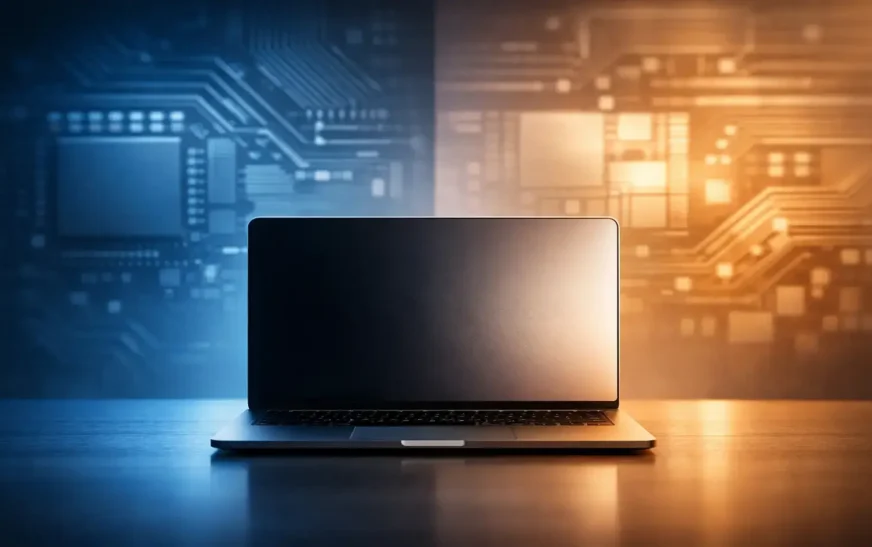
Few strategic actions in contemporary consumer technology have had implications as far-reaching as Apple’s decision to shift away from Intel chips and create its own silicon. When the shift was initially announced, it was portrayed as a technological progression. Over time, however, it became evident that the change reflected something far deeper. By 2025, Apple Silicon has altered not just Apple’s product selection but also how customers, developers and rivals think about computers as a whole.
This transition was never just about speed. It was about control, efficiency and the ability to shape the future without relying on external roadmaps. Looking back at how the change unfolded and forward to what it enables helps explain why its impact continues to grow.
The Limitations of the Intel Era
Before Apple Silicon, Apple’s partnership with Intel determined the limitations of Mac development. Intel CPUs supplied good raw performance, but Apple had minimal control over their design goals, power characteristics and release cycles. As Apple pushed for slimmer designs and longer battery life these limits became more obvious.
Portable systems in particular emphasized the difficulty. Heat buildup, fan noise and unpredictable sustained performance were recurrent difficulties. Although Apple was able to improve industrial design and optimize macOS, the CPU remained a bottleneck that it did not possess. As workloads got more demanding and demands for mobility rose this gap became difficult to ignore.
Why Apple Chose a Different Path
Apple didn’t suddenly decide to make its own silicon. Years of experience making bespoke processors for the iPhone and iPad have already shown how much better things work when hardware and software work closely together. It was an obvious but ambitious next step to bring that way of thinking to the Mac.
By building a system-on-a-chip customized exclusively for macOS, Apple acquired control over performance, power efficiency, graphics and specialist processing functions. This method enabled hardware and software to grow together rather than as distinct layers. Instead of customizing macOS to third-party CPUs, Apple could now develop silicon around the operating system itself.
Early Skepticism and Transition Challenges
The unveiling of Apple Silicon prompted reasonable worries. Users fretted about software compatibility, performance in professional applications and whether first-generation hardware would age properly. Platform shifts have traditionally been disruptive and pessimism was warranted.
Apple addressed these concerns with careful planning. Translation technology allowed existing applications to run reliably, often with minimal performance loss. At the same time, developers were given clear tools and incentives to build native versions of their software. Within a relatively short period, Apple Silicon–optimised applications became widespread, easing fears that the platform would fragment or stall.
Real-World Gains, Not Just Benchmarks
As the ecosystem grew up, the advantages of the change became clearer in everyday usage. Performance increases were no longer limited to benchmarks or marketing promises. Battery life has been a lot better, especially when the task is heavy. Fan noise decreased into the background and thermal throttling happened less often.
Laptops started to seem really mobile rather than like scaled PCs. This move redefined what a high-end portable computer should provide and altered user expectations. Rivals were had to admit that sustained performance and economy were equally as important as top speed.
The Changing Role of Intel-Based Macs
Macs with Intel processors did not vanish immediately. Apple maintained maintaining them and they remained capable devices for years after the shift occurred. However, their function eventually altered. As macOS progressed, new features and optimisations progressively inherited Apple Silicon capabilities.
This shift was subtle but consistent. Intel systems moved from being the default to becoming part of Apple’s legacy lineup. The change was not abrupt or dismissive it was the natural result of Apple’s forward momentum and long-term planning.
Planning Years Ahead with Custom Silicon
One of the most significant advantages of Apple Silicon is how it reshaped Apple’s development timeline. With full control over the processor, Apple could design hardware features years before software required them. Machine learning acceleration, media processing engines and advanced graphics capabilities were built directly into the silicon as foundational elements.
This long-term thinking built a framework geared to absorb future needs rather than respond to them. Instead of pursuing industry trends, Apple could foresee them, combining hardware capabilities with software innovation in a manner few businesses could mimic.
Longevity and User Confidence
For users, the benefits of Apple Silicon extended beyond immediate performance gains. Longevity became a defining characteristic. Devices built around Apple’s own architecture aligned naturally with the company’s software roadmap, ensuring smoother updates and longer relevance.
Security enhancements, performance optimisations, and new features flowed more consistently to Apple Silicon systems. Over time, this alignment built confidence that a device purchased today would continue to feel capable years down the line, rather than aging prematurely due to architectural limitations.
Broader Impact on the Laptop Industry
The impact of Apple’s success with bespoke silicon extended much beyond its own merchandise. It proved that tight integration between hardware and software may give substantial gains in efficiency, performance per watt and user experience. While other manufacturers could not duplicate Apple’s strategy directly the move altered industry goals.
System optimization, long-term performance and battery life have become more important factors in laptop evaluations. What originally seemed like luxury extras increasingly become basic expectations, in large part because Apple demonstrated they were doable at mass.
How the Transition Shapes Buying Decisions Today
The issue of whether Apple made the correct choice is no longer relevant by 2025. The effects may be seen in how people work, how software is developed and how laptops are evaluated. Consistent performance, efficiency and quietness are no longer specialized advantages.
For buyers considering Macbooks today, this historical context matters. Differences in pricing, performance behavior and long-term value are not arbitrary. They stem from Apple’s deliberate break from external processor dependency and its commitment to full-stack integration. What began as a technical transition has become a defining identity of the platform.
A Legacy Still Taking Shape
Intel is still an important part of Apple’s history. Intel-based Macs helped Apple develop a lot and compete with the best in professional computing at a very vital time. That chapter set the stage for what came next even if it doesn’t define the present anymore.
Viewed in full perspective, the transition from Intel to Apple Silicon stands as one of the most influential strategic shifts in modern consumer computing. It reshaped Apple’s products, reset user expectations and established a future where control over core technology is inseparable from user experience. The legacy is already clear and its influence continues to deepen with each new generation.